Current Exhibits
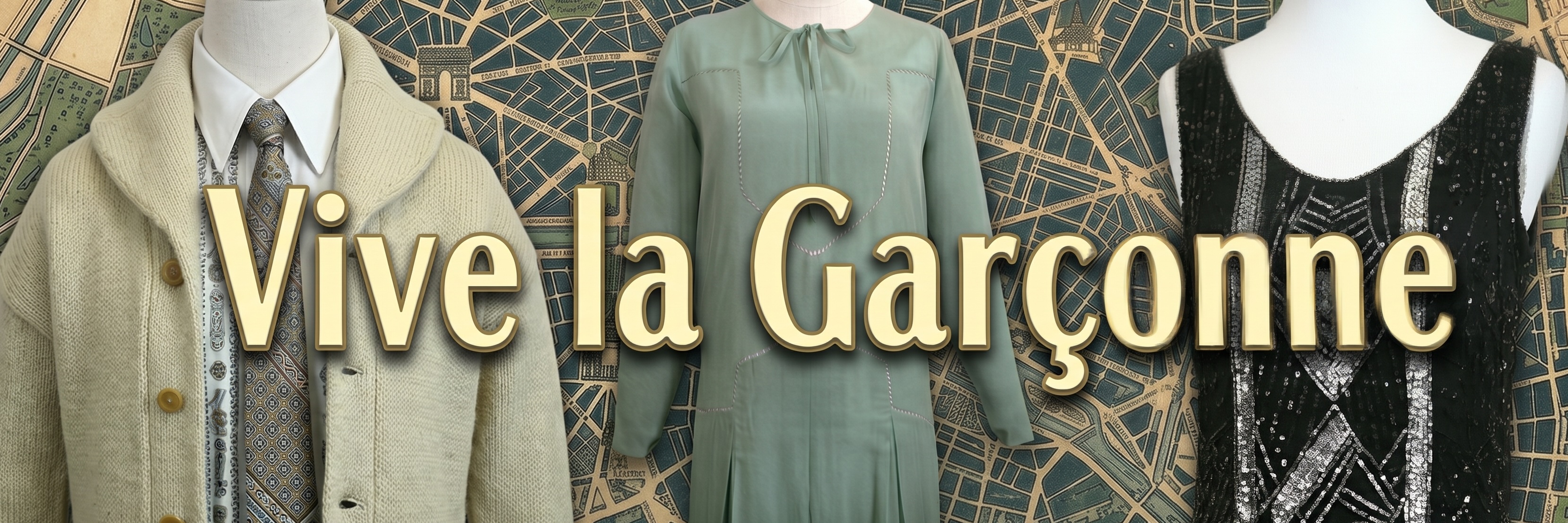
Vive la Garçonne
On View Now
Nothing short of a revolution occurred between 1910 and 1920, several in fact. In ten short years, the 19th century status quo ended, governments fell, a world war was fought, and hems rose.
The aftermath of the war led to many changes, including to women’s fashions. There was no return to tight lacing, long skirts, elaborate embellishments, and generally restrictive clothing. Experimentation and radical change ruled late 1910s fashion. By 1920, things began to coalesce around short, slim, “boyish”, or “garçonne” styles.
Evanstonians had a spectrum of responses, from the traditionalists to those who embraced the opportunities available. The taste of these women reflected their views whether they were housewives, office workers, professionals, or political activists.
This exhibit includes a range of fashions that reflect that spectrum.
Ongoing Exhibits
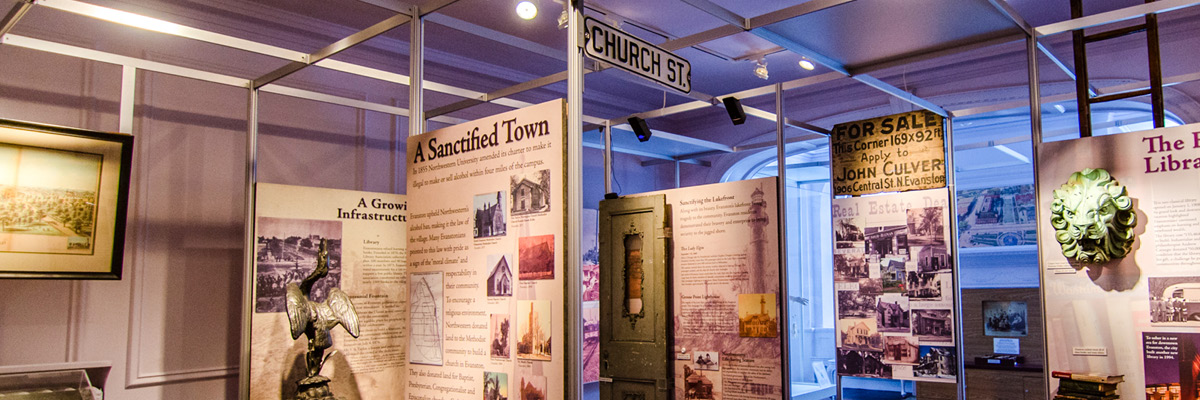
Milestones and Memories
Evanston history from its beginnings to today. This wonderful interactive exhibit uses artifacts and archival materials from EHCs collection to tell the story of the community and some of the amazing people who called Evanston home.
A Crowded Life: Charles Gates Dawes
A concise and comprehensive look at the prolific accomplishments of Charles Dawes, including his Nobel Peace Prize certificate, countless photographs, memorabilia, and film clips from his public and private appearances.

Past Exhibits
Unveiling Evanston Women Artists: A Sampling from the Collection of the Evanston History Center
On View: February 14 – April 12, 2026
Women artists have often been overlooked due to social expectations that prioritized domestic roles and systems that limited access to training, exhibition opportunities, and recognition.
This exhibit highlights women artists represented in the Evanston History Center’s collection of 20th-century art. It brings attention to their work and contributions, while also recognizing the many Evanston women artists whose stories remain underrepresented.
We invite visitors to explore these works and learn more about the artists who shaped Evanston’s cultural history.
It's All Fun and Games: Historic Toys of Evanston Exhibit
November, 2025 – January, 2026
The Evanston History Center presented an exciting exhibit celebrating Evanston’s iconic contributions to the toy industry. Visitors stepped into a world of creativity and nostalgia as they explored the Center’s extensive collection of historic toys and games.
Visitors discovered many inventions designed by Evanston residents, including Tinkertoys, created by Charles Pajeau and Robert Petit, and the imaginative designs of Marvin Glass, whose studio brought to life classics like Operation and Rock ’Em Sock ’Em Robots.
Adding to the fun were hundreds of beloved toys from the Evanston History Center’s collection, along with a special spotlight on Rudolph the Red-Nosed Reindeer, created by Evanstonian Robert L. May.
Pleats to Meet You - reFashioning History 2025
September – November, 2025
reFashioning History exhibits the contemporary fashion designs that were created for the reFashioning History competition together with the historical costumes that inspired them. This years’ theme? Pleats!
Folds of material around the body have existed since humans first fashioned clothing. Invariably, those folds became fashion. Whether made with precision or more freely arranged, folds, pleats, and tucks open wide avenues to design and creation. Ancient Egyptians, archaic & classical period Greeks, Assyrians, Thai, Han, and other culture incorporated folds and pleats into their garments in ways that have continued to inspire designers through the ages.
Modern designers have been no less inspired. in the twentieth century, designers such as Mme. Gres made a high art of deploying pleated fabric on the human form. Over nearly 60 year career she refined and developed her techniques, earning a reputation as a sculptor of fabric.
In turn she inspired others such as Issey Miyake, Mary McFadden, and Isabel Toledo to name just a few. All three of these designers developed their own signature use of pleated textiles in their designs making each’s designs instantly recognizable.
Our designers accepted the challenge to be inspired by pleats in their many forms as they can be found in the Evanston History Center’s Costume Collection. We invite you to come see the results.
Participating designers:
Jess Crane
Gabby Garza
Anna Glowacki
Aamina Hykal-lyare
Yung-Hsin Ko
Maribel Melanson
Holly Osborn
Sam Pogson
Zhuoxo Yang
50 Years of Celebrating Architecture and Community in Evanston
May 11 – August 31, 2025
The Evanston History Center’s popular House Walk opened doors to the community’s remarkable architectural heritage for fifty years. This exhibit celebrated the many artists, historians, homeowners, supporters, and patrons who made this annual event a fan favorite.
It took a behind-the-scenes look at the research that went into telling the story of a house, with documents and photographs from our archives that traced the history of the people who made each house a home.
The exhibit also highlighted the talented Evanston artists who illustrated our 50 House Walk books.
Picturing Community: Stories in Photographs
February 22 – March 23, 2025
The Evanston History Center partnered with the Evanston Art Center on an exhibition, “Picturing Community: Stories in Photographs.”
Photographs from the Evanston History Center archives told a story of Evanston’s growth as a community. The Evanston Art Center issued a call for artists to submit contemporary images of the city inspired by these photographs. The exhibition showcased the historic and contemporary photographs together to illustrate the commonalities the community shared, as well as the changes.